


BLOG
Discovering the Town of Arabba: Tourism, Activities, Culture and Specialities
In the heart of the Dolomites, between the Pordoi, Campolongo and Falzarego passes, Arabba holds a distinctive position that makes it far more than a simple winter sports village. A frazione of the municipality of Livinallongo del Col di Lana, in the province of Belluno, this mountain hamlet belongs to the Ladin valley of Fodom, a land with a strong identity shaped by centuries of alpine history, between Tyrolean and Venetian influences. Long kept apart from the main travel routes by its steep terrain, the valley developed a culture of its own, one that has stayed alive despite the rise of international tourism. Here is what to know about the village before your stay: its setting, its heritage, its activities and its food.
A village nestled in the heart of the Dolomites
Arabba sits at 1,602 metres, about 120 kilometres north of Venice and 45 kilometres north-west of Belluno, on the border between the provinces of Belluno, Trento and Bolzano. This position makes it a natural crossroads between several valleys and several cultures: Veneto to the south, Trentino to the west and German-speaking South Tyrol to the north. The village itself remains modest in size, with only a few hundred year-round residents, a figure that rises sharply during the tourist seasons. This small scale partly explains its charm: hotels are mostly family-run, shops cluster along the main street, and the whole place keeps the feel of a village rather than a resort built from scratch. The surrounding Dolomites, listed as a UNESCO World Heritage Site since 2009, offer a backdrop of limestone towers and spires that change colour throughout the day, a phenomenon known locally as enrosadira, especially visible at sunset from the higher parts of the village. This limestone rock, shaped by millions of years of erosion and the gradual retreat of glaciers, gives the surrounding peaks vertical forms and colours found nowhere else in the Alps, which largely explains the international reputation the range holds among photographers and mountain lovers.
A Ladin land with a living heritage
The valley’s name itself, Fodom in Ladin, is thought to refer to the beech trees that once covered these slopes, an origin also found in the municipality’s German name, Buchenstein. Even today, part of the population of Livinallongo del Col di Lana speaks Ladin in daily life alongside Italian, which places the valley among the five historic Ladin valleys of the Dolomites, together with Val Gardena, Alta Badia, Val di Fassa and Val di Fiemme. This cultural identity is passed on in particular through the Museo Ladino Fodom, based in Pieve di Livinallongo in the Cesa de la Cultura Fodoma, founded in 1996 through the work of a local schoolteacher passionate about local history. The museum presents the valley’s traditions, costumes and legends, including those of the Salvans and the Ganes, mythological figures still part of the local imagination. One section is also dedicated to Caterina Lanz, a Ladin heroine whose memory remains alive in the region, as well as to Andraz Castle, a fortress built around the year 1000 that long belonged to the Prince-Bishops of Bressanone and once guarded the southern border of Tyrol. Every summer, the museum also runs guided outings across the Fodom area, combining cultural heritage, history and local food, offering a livelier way to discover the valley than a simple visit to exhibition rooms.
On the trail of the First World War
Arabba’s history is not limited to its medieval and Ladin heritage. Between 1915 and 1917, the Col di Lana, which overlooks the valley, was the site of some of the deadliest fighting on the Dolomite front during the First World War, pitting Italian troops against Austro-Hungarian forces. Trench warfare, fought at extreme altitude, led both sides to dig tunnels to place explosives beneath enemy lines. In April 1916, the detonation of nearly 5,000 kilograms of dynamite tore off the mountain’s summit, which has since carried the nickname “Col di Lana, mountain of blood.” A museum dedicated to this period, open in season, displays more than 3,000 period artefacts along with reconstructions of barracks and trenches based on photographs taken by soldiers on both sides. The area also preserves several memorial sites, such as the military shrine at Pian di Salesei and the ossuary at the Pordoi Pass, which bear witness to the scale of this high-altitude fighting. These remains, now built into marked hiking routes, show just how deeply the front line marked the landscape and the collective memory of the valley, more than a century on.
Activities all year round
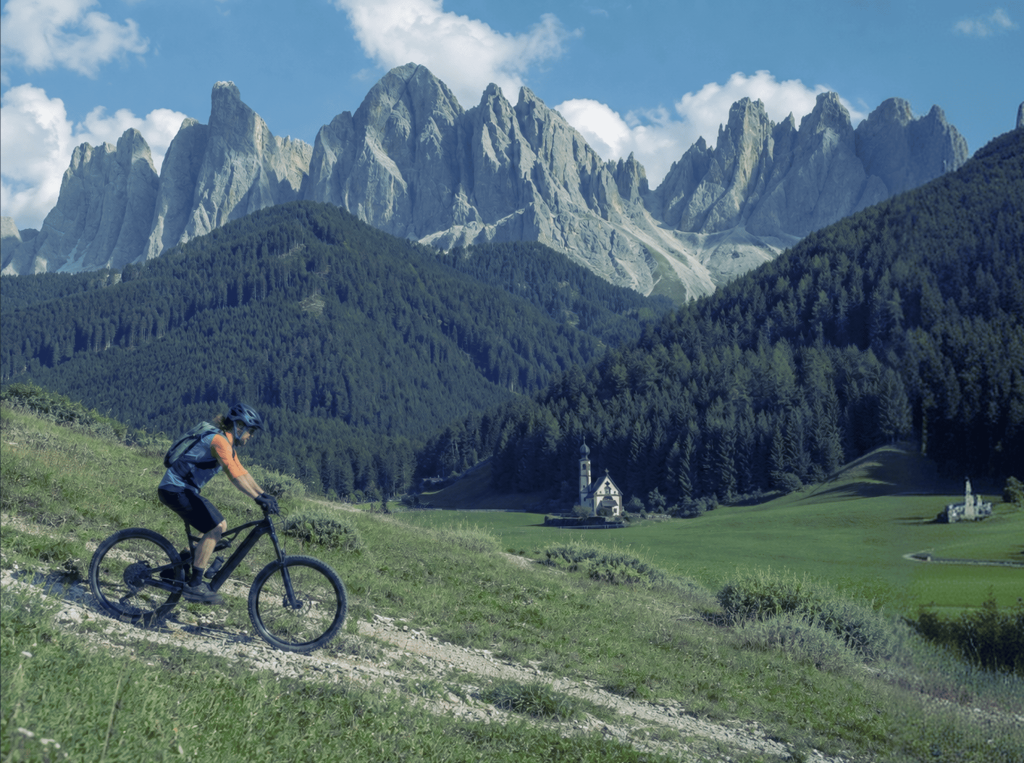
While Arabba owes its international fame to its ski area, part of Dolomiti Superski and the Sella Ronda circuit, the village really lives by two distinct seasons. Winter accounts for most of the tourist traffic, with an area particularly well suited to intermediate and advanced skiers, between the Porta Vescovo runs and access to the Marmolada glacier. Summer takes over with hiking, road cycling and mountain biking, driven by events such as the Sellaronda Bike Day, which closes the surrounding passes to motor traffic for a day. Between these two seasons, spring and autumn offer quieter periods, ideal for visiting the museums and Andraz Castle without the crowds. This alternation makes Arabba a destination in its own right, not merely a winter stopover, for anyone wanting to discover the Dolomites at a different pace depending on the season chosen.
Local specialities not to miss
The cuisine of the Fodom valley reflects the history of a mountain region long isolated, where locals learned to cook with limited but flavourful resources. Canederli, bread dumplings flavoured with speck, cheese or spinach, are served in broth or topped with melted butter and rank among the essentials on every local table. Casunziei, half-moon-shaped ravioli filled with beetroot or potato, are traditionally served with melted butter and poppy seeds. Gulasch, slow-cooked for hours, is always paired with polenta cooked in the ciaudrin, the region’s typical copper pot. Rarer specialities include grestl, a meat and potato dish seasoned with juniper berries, and foie fodome da levé, a fried batter made with flour, eggs and cumin. On the sweet side, smorn da pom, thick pancakes filled with apple pieces and raisins, traditionally close out the meal. The Latteria di Livinallongo, born from the initiative of a group of local farmers keen to preserve the valley’s cheesemaking know-how, also keeps this tradition alive with products such as Fodom, made only in summer, along with Renaz and Cherz, found on the tables of restaurants and mountain huts around Arabba throughout the year.
Between its Ladin heritage, its history shaped by the First World War and a generous mountain cuisine, Arabba goes well beyond the status of a simple stopover for passing skiers. A visit to the village works just as well as an afternoon between two days of skiing as it does a dedicated stay, given how the sites worth seeing are spread across the whole Fodom valley, from Pieve di Livinallongo to the Pordoi Pass. Whether you come to ski its slopes in winter, walk its trails in summer, or simply take in its history through a visit to the Museo Ladino Fodom and Andraz Castle, this Dolomite village offers a full picture of what makes this region, straddling several alpine cultures, so rich.